Why a Fence or Gate Goes Out of True
A fence rarely fails all at once, it goes out of true a little at a time, and knowing why tells you whether it needs a repair or a rebuild.
September 8, 2026 · 3 min read
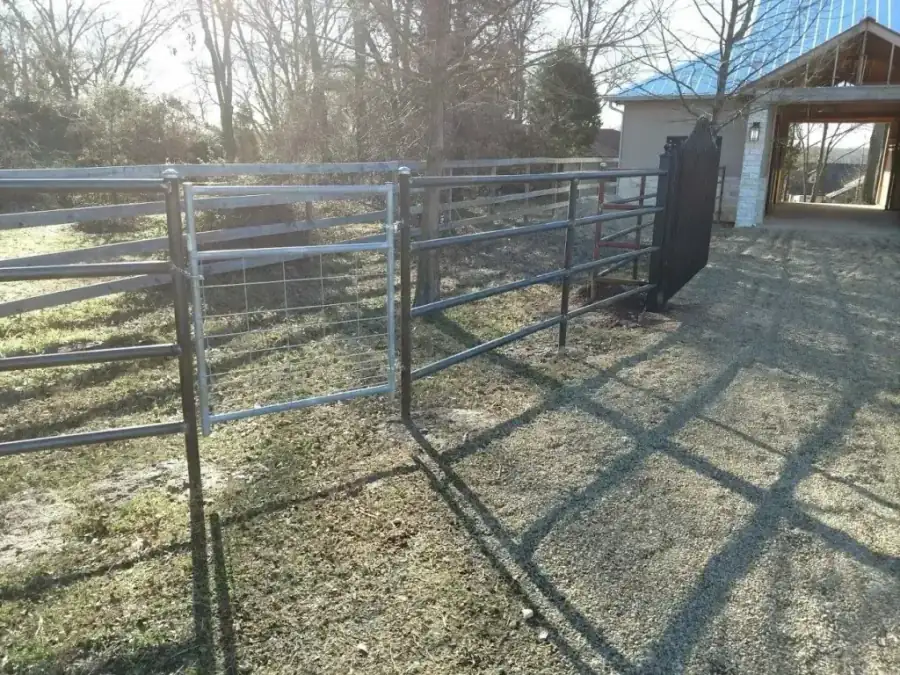
A gate that used to swing shut on its own and now drags on the ground didn't get that way overnight. Neither does a fence line that's started to lean. Most of the time there's a specific cause behind it, and knowing which one you're dealing with is the difference between a repair that fixes it for good and one that's just buying time.
- Ground shifting or soil erosion affecting fence stability
- Storm, wind, or extreme temperature damage
- Rotting or pest damaged wooden elements
- Rust or corrosion on metal components
- Wear and tear from daily use, especially on gates
When the Ground Moves
East Texas ground isn't as stable as people assume. Clay soil expands when it's wet and contracts as it dries out, and that constant movement puts pressure on anything set into it, fence posts included. Over a few seasons, that pressure can tilt a post just enough to throw off an entire section, especially if the post wasn't set deep enough or the concrete around it has started to crack.
Erosion does something similar from a different direction. A low spot that collects runoff after every rain slowly washes soil away from around a post base, loosening what used to be solid ground. Neither of these shows up as one dramatic event. It's gradual, which is exactly why it often goes unnoticed until a whole section is visibly leaning.
What Storms Leave Behind
Wind does the most obvious damage, especially to larger panel sections that catch it like a sail. A hard enough gust can rack a whole panel out of square or snap a rail, and even wind that doesn't break anything outright can loosen fasteners and hardware over repeated storms. Temperature swings play a quieter role, expanding and contracting wood and metal in ways that work hardware loose over time.
Rot, Pests, and Rust
Wood and metal fail for different reasons but they both fail from the same root cause: moisture that doesn't dry out. Wood posts and boards that stay damp, especially where they meet the ground, are exposed to rot and to the kind of pest damage that hollows a post from the inside before it ever shows on the surface. Staining and painting protects against a lot of this, which is part of why we recommend re-staining every two to three years rather than waiting until it visibly needs it.
Metal has its own version of the same problem. Rust and corrosion set in wherever a protective coating has worn through or where metal sits in standing moisture, and it's usually hardware and hinge points, not the main structure, where it shows up first.
Plain Wear
Gates take more punishment than fence lines simply because they move. Every open and close cycles the hinges, the operator if it has one, and the latch hardware, and daily use adds up faster than most people expect on a gate that gets opened multiple times a day. This is the main reason we recommend having gate hardware checked twice a year rather than waiting for something to fail outright.
Repair or Replace
Not every leaning fence or dragging gate needs to be torn out and rebuilt. A section that's out of true because of a couple of failed posts can often be reset and reinforced. A gate that's sagging because a hinge post shifted can sometimes be corrected without replacing the gate itself. The honest answer depends on how far it's gone, which is exactly why we look at the actual fence or gate before telling you which one you need.
That's the same habit that shows up in how customers describe our repair work: somebody comes out, looks at what's actually wrong, and works out a fix that fits rather than defaulting to a full replacement every time.
Why It's Worth Catching Early
A fence that's a little out of true doesn't stay that way. A post that's started to lean puts more load on the posts next to it, a gate that's begun to drag wears its hinges and hardware faster with every cycle, and a small run of rot at the ground line spreads if it isn't cut out and addressed. None of that means every issue is urgent, but it does mean the earlier something gets looked at, the smaller the fix usually is.
If your fence or gate has started to lean, sag, or drag, give Wilson Fence a call at (903) 677-8281. We'll take a look and tell you straight whether it's a repair or something bigger.
Wilson Fence, (903) 677-8281
Call (903) 677-8281More articles
What Actually Changes the Price of a Fence
The honest answer is that three things move a fence price more than anything else: the ground, the material, and how much fence you actually need.
What It Takes to Automate a Gate You Already Have
Adding an operator to a gate you already own is less about the motor and more about the weight, the posts, and the power at the entrance.