Choosing a Fence Material: What Each One Is Actually Good At
Wood, chain link, ornamental iron, vinyl, composite, and ranch rail all do a different job, and picking the right one starts with what you actually need the fence to do.
September 8, 2026 · 3 min read
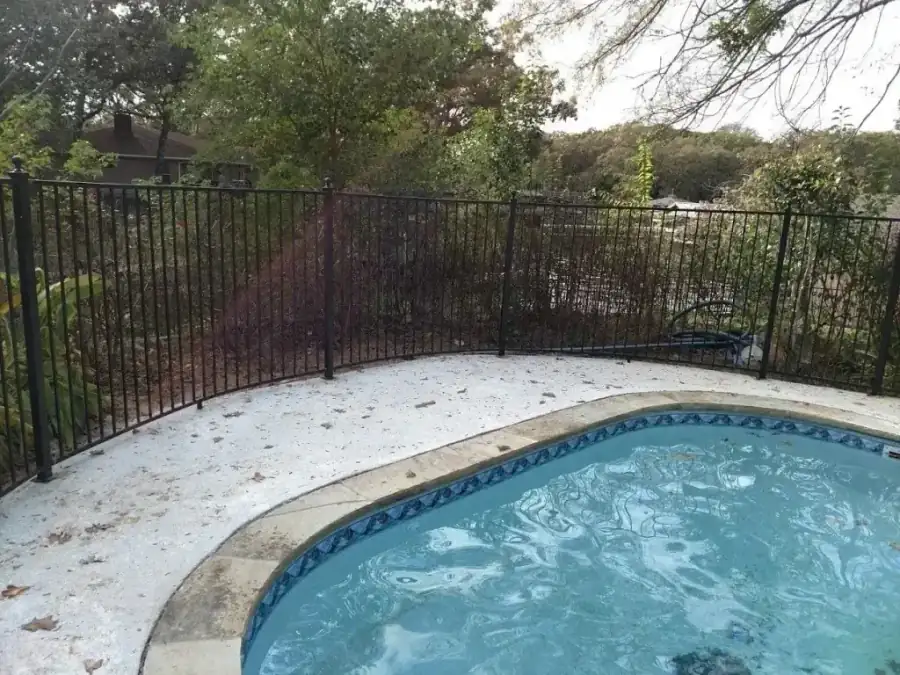
There isn't one best fence material, there's a best material for what you're trying to accomplish. A privacy fence around a pool has different needs than a boundary line running through pasture, and a fence meant to keep a dog in the yard doesn't need to do the same job as one meant to keep cattle off the road. Here's what each of the materials we install is genuinely good at, and where it isn't the right fit.
Wood
Wood is still the material most people picture when they think of a privacy fence, and for good reason. It blocks sightlines completely, it can be built in a range of styles from board on board to dog ear picket, and it takes stain or paint well, which lets you match it to a house or property however you want. The tradeoff is upkeep. Wood needs re-staining every two to three years to hold its protection and its look, and it's more exposed to rot and pest damage over time than metal or vinyl.
Where wood earns its keep is privacy and looks. If the goal is a yard you can't see into from the road, or a fence that looks like it belongs on an older East Texas property, wood is usually the right call.
Chain Link
Chain link doesn't get the same attention as wood or iron, but it's genuinely hard to beat for durability and cost when privacy isn't the point. It goes up fast, it holds up to weather and daily use, and it keeps visibility and airflow open, which is exactly what you want around a sports field, a dog run, or a commercial yard where you need a secure line without blocking the view.
It isn't built for privacy and it isn't the fence you'd pick for curb appeal on a front yard, but for containment and security at a reasonable cost, it does the job it's meant to do without complaint.
Ornamental and Wrought Iron
Iron fencing, whether ornamental or heavier wrought iron, is where welding and craftsmanship really show up. It's strong, it lasts, and it has a classic look that suits a pool enclosure, a formal front entrance, or a driveway gate better than almost anything else. Our crew includes certified welders, which matters here because iron work lives or dies on the quality of the welds and how well it's fitted to the posts.
The cost of that strength and look is that iron needs some attention over time to stay ahead of rust, particularly in humid East Texas summers. It's an investment fence, built for places where looks and security both matter.
Vinyl and Composite
Vinyl and composite fencing exist to solve wood's biggest weakness: upkeep. Composite combines the strength people expect from wood with a resistance to rot, fading, and warping that wood alone doesn't have. Vinyl gives you a clean, modern look with very little maintenance beyond an occasional wash. Neither one needs staining.
The tradeoff runs the other way from wood: less of that natural, weathered look, and a different price point going in. For homeowners who want privacy without a re-staining schedule, it's often the better long term answer.
Field and Ranch Rail
Out on acreage, pasture, and working land, field fence and ranch rail solve a completely different problem than a residential privacy fence. Field fence is built to contain livestock and hold up across uneven terrain, fence lines that run through low ground, over rises, and around trees rather than a flat, straight residential lot. Ranch rail, with its wide horizontal rails, gives working land a clean, open look that also serves as a real boundary.
Neither is meant to block a view or create privacy. They're meant to define land and keep animals where they belong, which is a different job than the fence around a backyard pool.
- Wood: best for privacy and a classic look, needs re-staining every two to three years
- Chain link: best for durability, visibility, and cost on fields, runs, and commercial sites
- Ornamental and wrought iron: best for strength and a formal, upscale look
- Vinyl and composite: best for low maintenance privacy with no staining
- Field and ranch rail: best for pasture, acreage, and containing livestock
If you're not sure which material fits your property, that's exactly what a free estimate is for. Call Wilson Fence at (903) 677-8281 and we'll walk the ground with you and talk through what actually makes sense for what you're trying to do.
Wilson Fence, (903) 677-8281
Call (903) 677-8281More articles
What Actually Changes the Price of a Fence
The honest answer is that three things move a fence price more than anything else: the ground, the material, and how much fence you actually need.
What It Takes to Automate a Gate You Already Have
Adding an operator to a gate you already own is less about the motor and more about the weight, the posts, and the power at the entrance.